When shopping for wood furniture, the finish can have a major influence on what you see. The same type of wood can look noticeably different depending on the stain, paint, sheen, and finishing process used by the manufacturer.
A finish is not simply a color choice. Depending on the product, it can highlight the natural grain, change the apparent color of the wood, create a more uniform appearance, or cover much of the wood underneath.
Understanding these differences can make it easier to compare furniture and know what to expect when your piece arrives.
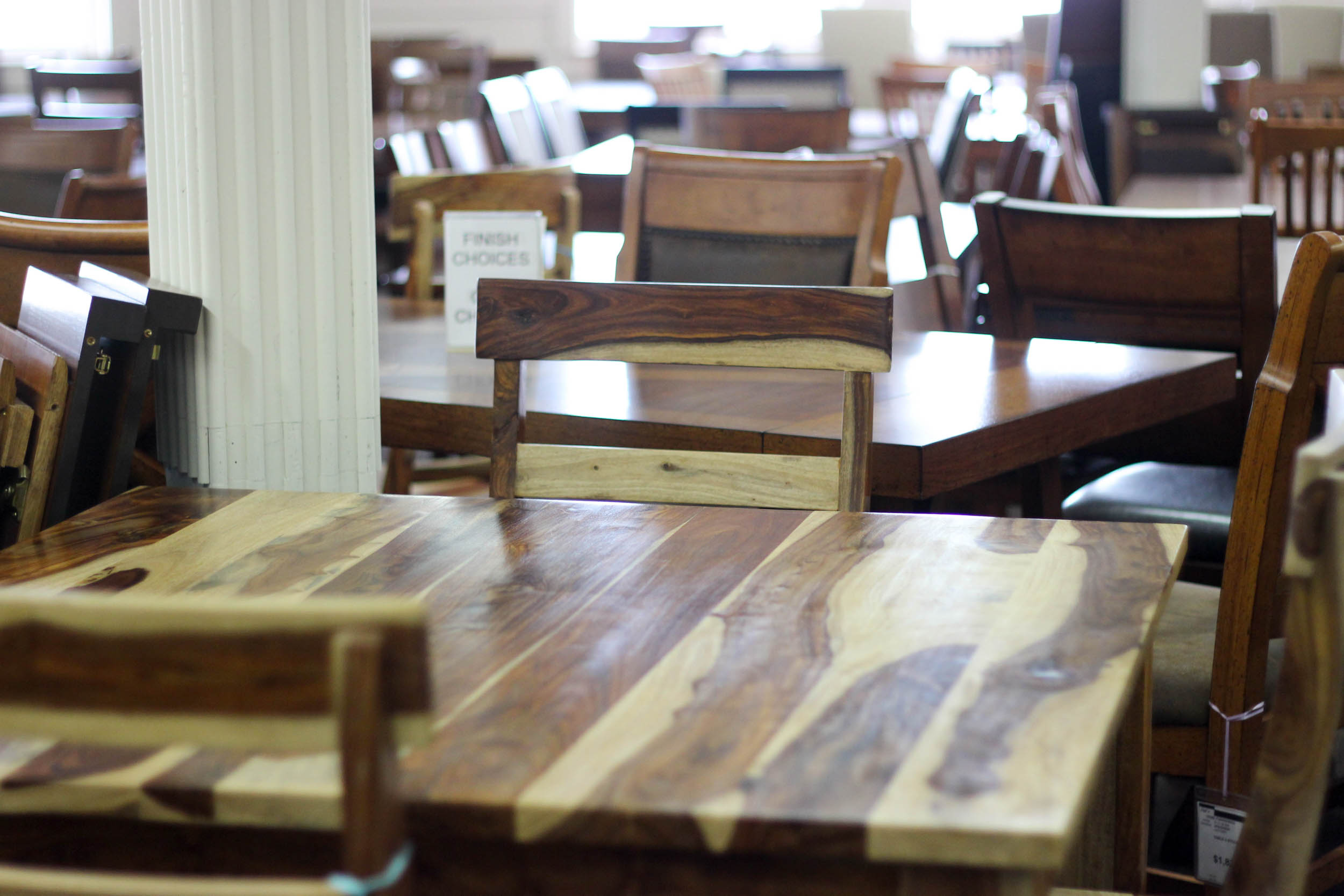
At a Glance
When comparing wood furniture finishes, consider:
- Whether you want the wood grain to remain visible
- Natural wood color versus a stained appearance
- Painted versus translucent finishes
- Matte, satin, or glossier appearances
- Natural variation from one piece of wood to another
- Whether the finish is intentionally distressed
- How closely a sample represents the finished piece
- Manufacturer-specific care instructions
There isn’t one finish that is right for every home. The better choice depends on the appearance you prefer, the particular piece of furniture, and the options offered by its manufacturer.
What Is a Wood Furniture Finish?
The word “finish” can refer to the materials and processes applied to the surface of wood furniture.
Depending on the furniture, that might involve stain, paint, lacquer, oil and wax, water-based coatings, or other finishing systems.
These treatments don’t all produce the same result.
Some are translucent and allow the grain and natural characteristics of the wood to remain prominent. Others create a more opaque surface that changes how much of the underlying wood you see.
This distinction is useful when shopping because two pieces made from similar wood can look very different after finishing.
If you want to understand the materials beneath the finish, our guide to Solid Wood vs. Engineered Wood takes a closer look at furniture materials and construction.
Natural-Looking Finishes
If you like seeing the grain and natural character of wood, you may prefer a finish that keeps those features visible.
Natural-looking does not necessarily mean unfinished. A piece may still have a clear or lightly colored protective finish applied to its surface.
With less color obscuring the wood, characteristics such as grain patterns, knots, mineral streaks, and variations between boards may be more noticeable.
Those variations are normal characteristics of natural wood. Wood can also change in appearance over time as it is exposed to air and light. The amount and type of change depend on the wood and finish.
For shoppers, the important point is that a natural-looking wood surface should not necessarily be expected to have completely uniform color or remain exactly the same color throughout its life.
What Does Wood Stain Do?
Wood stains are commonly used to change or enhance the color of wood while allowing the grain and other natural characteristics to remain visible.
This gives furniture manufacturers a range of appearance options. Depending on the manufacturer and collection, the same furniture may be offered in lighter, medium, or darker finishes.
Stain does not make every board look identical.
Because wood varies naturally, different parts of a piece may display stain differently. Grain patterns and variations in color can remain visible after staining.
This is one reason a small finish sample should be treated as a representation of the general appearance rather than a guarantee that every surface on a finished piece will look exactly the same.
How Are Painted Finishes Different?
Painted finishes are generally more opaque than stains and can cover more of the natural color and grain of the underlying material.
That makes paint useful when the desired appearance is driven primarily by color rather than visible wood tone.
Painted furniture can range from traditional whites and neutrals to darker or more distinctive colors, depending on the manufacturer.
A painted finish should not automatically be considered better or worse than a stained finish. They create different appearances, and the appropriate choice depends on the furniture and the look you prefer.
Care requirements may also vary according to the particular finishing system, so don’t assume every painted surface should be cleaned or maintained in exactly the same way.
What Does Sheen Mean?
Color isn’t the only visual characteristic of a furniture finish.
Sheen describes how much light a finished surface appears to reflect. Depending on the manufacturer, you may encounter terms such as matte, low-sheen, satin, semi-gloss, or gloss.
A lower-sheen finish reflects less light and can create a more subdued appearance. A higher-sheen surface reflects more light and may appear more polished.
Terminology is not necessarily identical from one manufacturer to another. A finish described as “satin” by one company may not look exactly like another company’s satin finish.
Lighting can also affect how a finish appears. The same piece may look somewhat different under bright showroom lighting, daylight, and the lighting inside your home.
For that reason, it is helpful to look at the actual finish rather than making a decision based only on its name.
Natural Variation Is Normal
One of the most important things to understand about wood furniture is that wood is a natural material.
Grain patterns, color, and other characteristics can vary from board to board. That variation may remain visible even after the furniture has been stained and finished.
This means furniture delivered to your home may not be visually identical to a showroom piece, photograph, or small finish sample.
The amount of variation depends on the wood, finish, and manufacturer’s standards.
If you prefer a more consistent appearance, ask what level of natural variation you should expect before ordering.
Knowing this ahead of time can help distinguish normal wood characteristics from an actual finish problem.
Complete Guide to High-Quality Furniture in Salem Oregon
What Is a Distressed Finish?
Some furniture is intentionally finished to look aged, worn, or less uniform.
Depending on the manufacturer, distressing may include rubbed edges, surface markings, variations in color, or other intentionally created details.
These characteristics are part of the design rather than damage that occurred after the furniture was made.
The amount of distressing can vary considerably. One collection may have subtle details, while another may have a much more pronounced aged appearance.
If you’re considering distressed furniture, look closely at a showroom example, sample, or manufacturer imagery so you understand the intended appearance before ordering.
Finish Samples Are Helpful, but They Aren’t Exact Replicas
If finish samples are available, they can be useful when comparing options.
A sample can make it easier to see differences in color, undertone, grain visibility, and sheen than relying only on a photograph or computer screen.
However, a sample is still only a sample.
Natural wood varies, so the grain and color of the finished furniture may differ somewhat from a small sample. A showroom piece may also have been exposed to light and air for a different amount of time than a newly manufactured piece.
Use samples to understand the general appearance of a finish rather than expecting every board on the finished furniture to look identical.
What If You’re Trying to Match Furniture You Already Own?
An exact finish match can be difficult.
Two manufacturers may use similar names for finishes that look noticeably different. Furniture can also be made from different woods, use different finishing processes, or have different sheen levels.
Existing wood furniture may have changed in appearance over time as well.
If you’re adding a piece to a furnished room, compare actual samples when possible instead of relying on the finish name alone.
And remember that furniture doesn’t necessarily have to match exactly. If you’re trying to decide how different finishes can work together, our guide to Should Your Furniture Match covers that subject in more detail.
Care Depends on the Finish
There is no universal cleaning method that is appropriate for every wood furniture finish.
Manufacturers may give different instructions for lacquered, painted, stained, oiled, waxed, or other finished surfaces.
For that reason, follow the care instructions provided for your particular furniture.
As general precautions, furniture manufacturers commonly recommend protecting finished wood from excessive moisture and heat, wiping spills promptly, and avoiding dragging rough or sharp objects across the surface.
Be cautious with furniture polishes, oils, solvents, and household cleaning products unless the manufacturer says they are appropriate for that particular finish. A product that is suitable for one surface may be unnecessary or potentially damaging to another.
If you’re unsure, check the manufacturer’s instructions before applying a cleaning or conditioning product.
Questions to Ask When Comparing Furniture Finishes
You don’t need to become an expert in finishing systems before buying wood furniture.
A few practical questions can help:
- Is the finish translucent or opaque?
- How much of the natural grain will remain visible?
- What natural variation should I expect?
- Is the finish intentionally distressed?
- Can I see a larger example of the finish?
- Are other finish options available for this piece?
- How closely should the sample represent the finished furniture?
- What care does the manufacturer recommend?
The answers can give you a clearer idea of what the furniture should look like and what to expect after it is in your home.
Frequently Asked Questions
Is stained wood the same as painted wood?
No. Stain generally changes the color while allowing the wood grain and some natural characteristics to remain visible. Paint is typically more opaque and covers more of the underlying wood’s natural appearance.
Does a natural finish mean the wood is unfinished?
Not necessarily. Furniture with a natural appearance may still have a clear or lightly colored finish. Check the manufacturer’s description for the specific piece.
Will my furniture look exactly like the showroom sample?
Not always. Natural wood can vary in grain and color, so there may be differences between samples, showroom pieces, photographs, and delivered furniture.
Does wood furniture change color over time?
It can. Exposure to light and air can change the appearance of natural wood over time. How noticeable that change is depends on the wood and finish.
What is a distressed furniture finish?
A distressed finish intentionally creates an aged or worn appearance. The techniques and amount of distressing vary by manufacturer and collection.
Should wood furniture finishes match?
They don’t have to. If you are coordinating several pieces, consider how the different finishes look together rather than assuming they need to be identical.
What is the best way to clean finished wood furniture?
Follow the manufacturer’s instructions for the specific finish. Different finishing systems can require different care, so avoid assuming a general furniture polish, oil, or cleaner is appropriate for every wood surface.
What to Look for Before Deciding
When comparing wood furniture finishes, start with what you can actually see.
Look at how much of the natural grain remains visible, how the color changes the appearance of the wood, the amount of sheen, and whether the piece has intentional distressing or other decorative finish details.
If samples are available, use them to compare options while remembering that natural wood can vary.
Finally, ask about care requirements and what level of variation you should expect in the finished furniture.
Understanding those details can help you make a more informed decision without assuming that one type of furniture finish is automatically better than another.
