You can have the main furniture in place and still feel like something is missing.
The sofa may be against the right wall. The chairs may fit comfortably. The dining table may be exactly where you planned it. Yet the room can still feel unfinished.
Often, the difference comes down to the supporting pieces.
Occasional tables, lighting, area rugs, accent seating, and storage pieces can help a room function better while bringing the different parts of the space together. But finishing a room does not mean filling every empty corner.
The goal is to create a space that feels useful, comfortable, and complete without adding furniture simply because there is room for it.
At a Glance
- Start with the major furniture before adding smaller pieces.
- Look for functional gaps rather than empty spaces that need to be filled.
- End tables and occasional tables can make seating areas more useful.
- Lighting can serve both practical and decorative purposes.
- Area rugs can help visually define furniture groupings.
- Accent chairs and storage pieces should have a reason for being in the room.
- A finished room should still have comfortable pathways and some open space.
- Seeing furniture, rugs, and accessories together can make it easier to judge proportion and scale.
Start With the Furniture the Room Actually Needs
Before thinking about accessories or finishing pieces, make sure the room’s main furniture is working.
In a living room, that might mean the sofa, sectional, recliner, or primary chairs.
In a dining room, it is usually the table and seating.
In a bedroom, the bed and necessary storage typically establish the foundation of the room.
Once those pieces are in place, it becomes easier to see what is actually missing.
Instead of asking, “What can I put in this empty spot?” try asking:
- Is there somewhere convenient to set down a drink?
- Does this seating area need additional light?
- Would another seat actually be used?
- Is there something in the room that needs storage?
- Does the furniture grouping feel visually disconnected?
Those questions help separate useful additions from pieces that may only add clutter.
Occasional Tables Can Make a Room More Functional
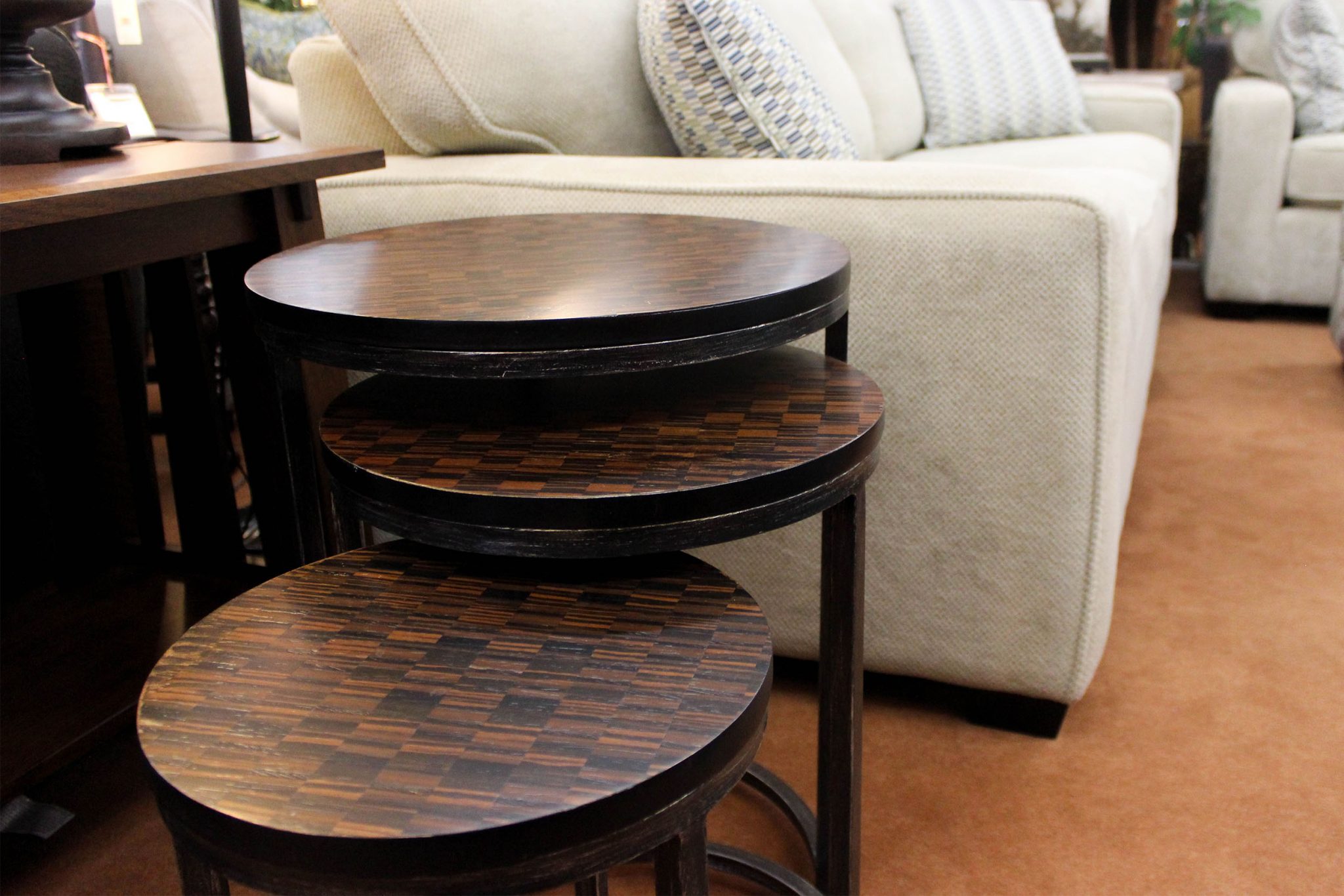
Coffee tables, end tables, sofa tables, and other occasional tables may be smaller than the room’s main furniture, but they can have an important practical role.
An end table beside a sofa or chair creates a convenient surface for a lamp, book, drink, or other everyday item.
A coffee table can provide a central surface for a seating area.
A console or sofa table may work behind a sofa, along a wall, or in another area where a narrower piece makes sense.
The right table depends on the furniture around it and how the room is used. A table that is too large can interfere with movement, while one that is too small may not provide much useful surface area.
The important point is that these pieces should solve a need. You do not necessarily need an end table beside every seat or a coffee table in every living room.
Lighting Is Part of How the Room Works
Lighting is easy to think of as something separate from furniture, but lamps often become an important part of how a furnished room functions.
A room may have overhead lighting and still benefit from additional light near a chair, sofa, desk, or reading area.
Table lamps can work well where an occasional table already provides a surface. Floor lamps can be useful when there is no appropriate table nearby or when the layout calls for a different type of lighting.
Lighting also contributes to the visual character of a room because lamps have their own scale, shape, materials, and style.
That does not mean every lamp needs to match the furniture. It means the lighting should make sense for both the activity and the space around it.
Area Rugs Can Help Define a Furniture Grouping
An area rug can do more than add color or pattern.
In many rooms, it can help visually define where one furniture grouping begins and ends.
This can be especially useful in living rooms and open floor plans, where a sofa and chairs may share a larger space with a dining area or another part of the home.
Rug size matters. A rug that is too small for the furniture grouping can feel disconnected from the pieces around it, while a properly proportioned rug can help the arrangement feel more intentional.
The rug does not have to fill the entire room. It needs to work with the furniture arrangement and the proportions of the space.
Accent Seating Should Have a Purpose
An accent chair can add another shape, material, or upholstery choice to a room, but its most important job is still providing a useful place to sit.
Before adding another chair, think about whether the room actually needs additional seating.
Consider:
- How often guests use the room
- Whether the chair will be used regularly
- Where it can be positioned without blocking movement
- Whether it creates a natural conversation area
- How its size compares with the sofa and other seating
A chair does not have to perfectly match the sofa to belong in the room.
In fact, mixing furniture can often create a more collected look when the pieces share enough visual connection through proportion, color, materials, or overall style.
The goal is coordination rather than making every upholstered piece identical.
Storage Pieces Can Finish a Room While Solving a Problem
Sometimes the missing piece is not decorative at all.
A cabinet, console, chest, sideboard, or other storage piece may help finish a room because it gives everyday belongings somewhere to go.
Before adding storage, identify what actually needs to be stored.
For example:
- Dining rooms may need space for serving pieces or table linens.
- Living rooms may need storage for games, media, or other frequently used items.
- Entry areas may benefit from a surface or enclosed storage.
- Bedrooms may need additional drawer or cabinet space.
Buying storage before identifying the need can result in a piece that takes up room without making the space more useful.
Start with the problem first. Then decide whether another piece of furniture is the right solution.
Don’t Fill Every Empty Wall or Corner
One of the easiest ways to over-furnish a room is to treat every open area as a problem.
Empty space is not necessarily unfinished space.
Rooms need areas where people can walk comfortably, pull out chairs, open drawers, and move between furniture pieces.
Some visual space around furniture can also make individual pieces easier to appreciate.
If adding another chair, table, cabinet, or accessory makes the room harder to use, the room may have been closer to finished before the piece was added.
This is where furniture scale becomes especially important. A few appropriately sized pieces can often work better than several smaller pieces added simply to occupy space.
Look at the Room as a Whole
When a room feels unfinished, it can be tempting to focus on the most obvious empty area.
Instead, look at the entire room.
Consider the relationship between:
- Large and small furniture
- Upholstered pieces and wood furniture
- Open areas and occupied areas
- Seating and usable surfaces
- Furniture and lighting
- Furniture groupings and area rugs
- Storage and the items that actually need storing
A room can contain different furniture styles, materials, and finishes and still feel connected.
The pieces do not need to match perfectly. They simply need enough relationship to one another that the room feels intentional rather than accidental.
Know When to Stop
Knowing when a room is finished can be just as important as knowing what to add.
Ask yourself:
- Does everyone have the seating they need?
- Are there convenient surfaces where they are useful?
- Is the lighting appropriate for how the room is used?
- Is there enough storage for the things that belong there?
- Can people move through the room comfortably?
- Does anything feel obviously missing?
If the room works well and feels balanced, another piece may not improve it.
Furniture should support the way you live in the space. A finished room is not measured by how many pieces it contains.
Seeing the Pieces Together Can Help
Photos and measurements are useful when planning a room, but seeing furniture in person can provide another perspective on scale, materials, finishes, and proportions.
For example, you may be able to compare the height of different end tables, see how a lamp relates to the table beneath it, or look at rug patterns and textures alongside upholstered and wood furniture.
Bringing room measurements and photos of the space can also make those comparisons more useful.
For larger furniture decisions, construction and materials remain important considerations as well.
The goal is not to find the greatest number of pieces for the room. It is to choose the pieces that make sense together and support how the space is actually used.
Complete guide to high-quality furniture in Salem Oregon
Frequently Asked Questions
What makes a room look finished?
A room often feels finished when the main furniture is supported by the smaller pieces the space actually needs, such as useful tables, appropriate lighting, an area rug, additional seating, or storage. Proportion, layout, and open space also contribute to the overall result.
Does every living room need a coffee table?
No. A coffee table can be useful, but it is not necessary in every living room. The furniture layout, available space, and how the room is used should determine whether one makes sense.
Do end tables need to match?
No. End tables can match, but they do not have to. Different tables can work together when their scale, materials, colors, or overall style relate well to the rest of the room.
Does an area rug make a room feel more complete?
An area rug can help define a furniture grouping and add color, pattern, or texture, but not every room requires one. The decision should depend on the layout and the look you want to create.
How do I know if I have too much furniture?
If furniture makes it difficult to move through the room, use seating comfortably, open drawers, or access other pieces, the space may be over-furnished. Removing something can sometimes improve both function and visual balance.
Should all the furniture in a room be the same style?
No. Different styles can work together. Paying attention to proportion, materials, color, and the overall relationship between pieces can help a mixed room feel intentional.
